
MATERIAL INTRODUCTION
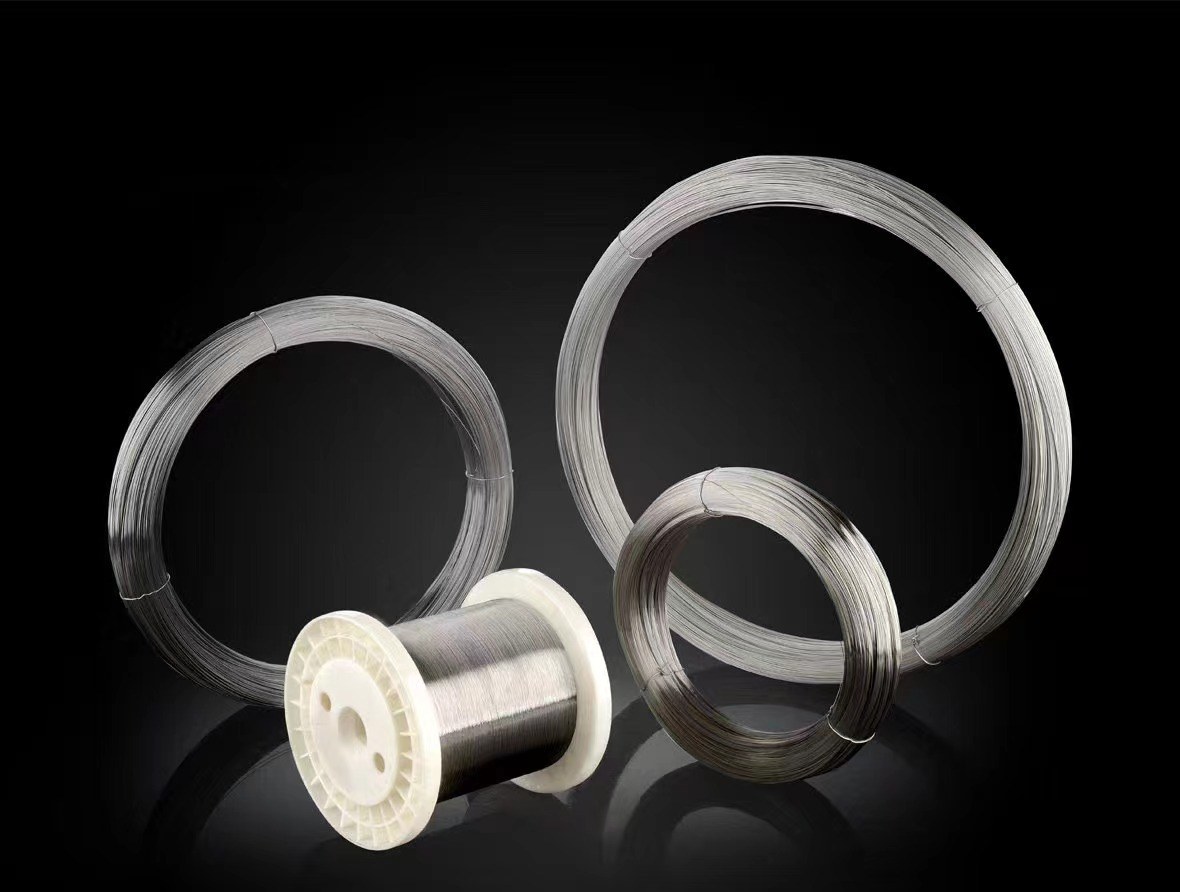
316 Stainless Steel Spring Wire
Austenitic stainless steel spring wire, density: 7.93 g/cm³.
Discuss your specifications ↗Chemical Composition (wt%)
| Item | Specification / Description |
|---|---|
| C | ≤0.08 |
| Si | ≤1.00 |
| Mn | ≤2.00 |
| P | ≤0.045 |
| S | ≤0.030 |
| Cr | 16.0~18.5 |
| Ni | 10.0~14.0 |
| Mo | 2.0~3.0 |
316L variant: C ≤0.03, superior intergranular corrosion resistance for welded parts
Applicable Standards
| Item | Specification / Description |
|---|---|
| Standard / designation | JIS G4314 |
| Standard / designation | GB/T 4240 |
| Standard / designation | ASTM A313 |
| Standard / designation | EN 10270-3 (1.4401) |
Tensile Strength
| Item | Specification / Description |
|---|---|
| Specification | (Cold drawn tempers, MPa, finer wire gets higher strength) |
| ANN (Soft) | 550~750 MPa, good ductility for forming |
| 1/2H (Half hard) | 750~950 MPa |
| SH (Spring hard) | 1050~1500 MPa |
| Note | Elasticity only from cold drawing, not hardenable by quenching. Non-magnetic after annealing, weak magnetism after cold drawing. Slightly lower strength than 304 at same diameter. |
Common Surface Finishes
| Item | Specification / Description |
|---|---|
| BA bright finish | bright surface for cosmetic & precision springs |
| Matte/dull finish | preferred for springs to reduce stress concentration |
| Pickled finish | economical general purpose |
Size Range
| Item | Specification / Description |
|---|---|
| Diameter | 0.05~8.0 mm, tight tolerance down to ±0.002 mm, coils or spools available |
Features
- Molybdenum added, excellent resistance to chloride, seawater, salt spray & mild acid, much better than 304 for marine & chemical service
- Austenitic grade, no quenching hardening; service temperature up to ~300℃
- Good weldability, but spring property is lost after welding, not for load-bearing welded springs
- Lower work-hardening rate than 304, slightly inferior elasticity, higher cost
Applications
Springs for seawater environment, sanitary hardware, marine compression/tension/torsion springs, medical device springs, chemical equipment elastic parts, seawater filter mesh, swimming pool fittings, probe springs under salt spray
Material Selection Guide
316 spring wire: Mo-bearing, salt spray & chloride resistant for corrosive marine environment
304 spring wire: general corrosion resistance, cost-effective, not for brine
301 spring wire: high work-hardening, better elasticity, poorer corrosion resistance
631 (17-7PH): precipitation hardening, ultra-high strength, high-temperature springs