
MATERIAL INTRODUCTION
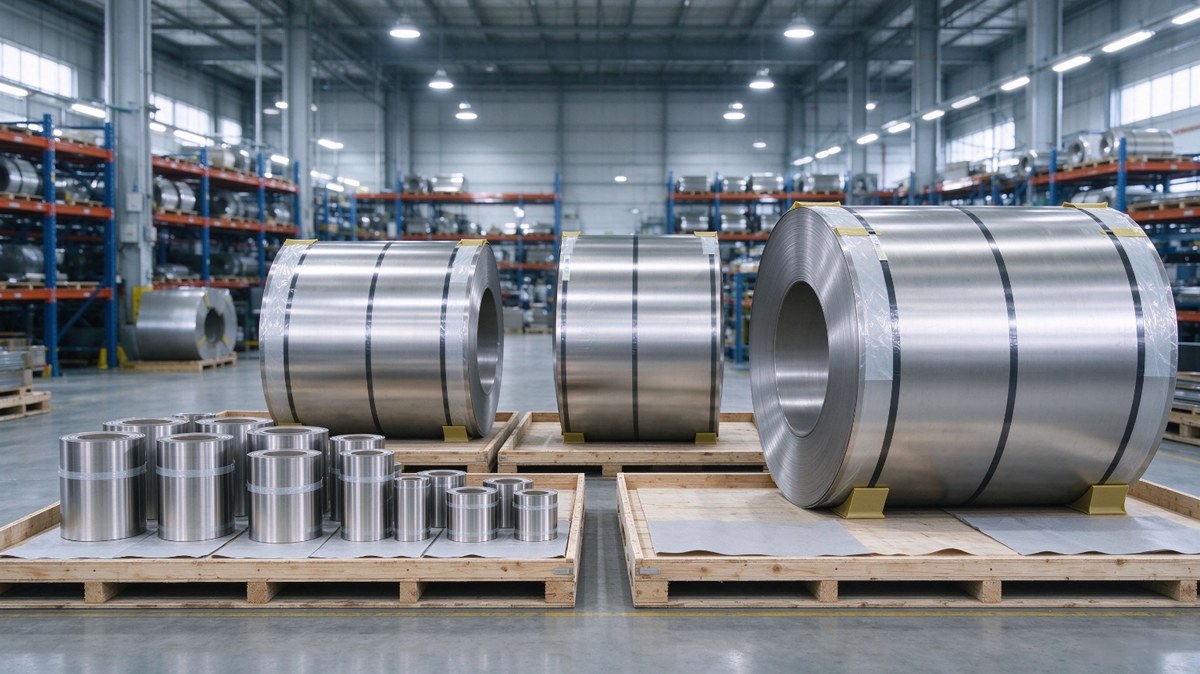
316 Stainless Steel Strip
Molybdenum-containing austenitic stainless steel strip, cold-rolled precision stainless steel strip, density: 7.98 g/cm³.
- Grade
- 316
- Thickness
- 0.02–3.0 mm
- Width
- 2 mm
Chemical Composition (wt%)
| C | Cr | Ni | Mo | Mn | Si |
|---|---|---|---|---|---|
| ≤0.08 | 16.0~18.0 | 10.0~14.0 | 2.0~3.0 | ≤2.0 | ≤1.0 |
Applicable Standards
| Standard / Designation |
|---|
| GB/T 3280 |
| JIS G4305 / JIS G4313 |
| ASTM A240 |
| EN 10088-2 |
Tempers & Hardness
| Temper | Hardness / Characteristics |
|---|---|
| ANN (Annealed, Soft Temper) | HV ≤200, good elongation, suitable for deep drawing and bending |
| 1/4H | 220–250 HV |
| 1/2H | 250–310 HV (Most commonly used half-hard material for stamping) |
| 3/4H | 310–370 HV |
| FH (Full Hard) | ≥370 HV, good elasticity but prone to cracking during bending |
Common Surface Finishes
| Surface | Description / Applications |
|---|---|
| 2B | Matte silver finish, highest cost-performance, primary grade for industrial stamping |
| BA (Bright Annealed) | Bright reflective surface, for cosmetic parts |
| No.4, HL Hairline, 8K Mirror | For decorative applications |
Size Range & Precision Slitting (Edge trimming and deburring)
0.02–3.0 mmThickness
2 mmWidth
±0.002 mmTight tolerance available
Can be slit and precision cut per drawings. Please confirm required dimensions and achievable tolerances with your inquiry.
Material Features
- Molybdenum alloying improves resistance to chloride corrosion, good for seawater, brine and chemical media; better corrosion resistance than 304
- Heat resistance: Long-term service temperature ≤800℃, excellent low-temperature toughness
- Good weldability. 316L low-carbon variant provides superior intergranular corrosion resistance after welding
- Noticeable work-hardening by cold rolling; suitable for springs under moderate fatigue requirements
Applications
Marine components, chemical equipment, seawater pipelines, pharmaceutical machinery, food processing equipment, environmental facilities, precision gaskets, corrosion-resistant shielding parts, sensor components, etc.
Material Comparison
| Grade | Key Characteristics |
|---|---|
| 316 | Molybdenum added, good chloride resistance, moderate elasticity |
| 316L | Low-carbon grade, preferred for welding, better resistance to intergranular corrosion |
| 304 | No molybdenum, poor chloride resistance, lower cost |
| 301 | High work-hardening property, mainly for spring contacts, inferior corrosion resistance |