
MATERIAL INTRODUCTION
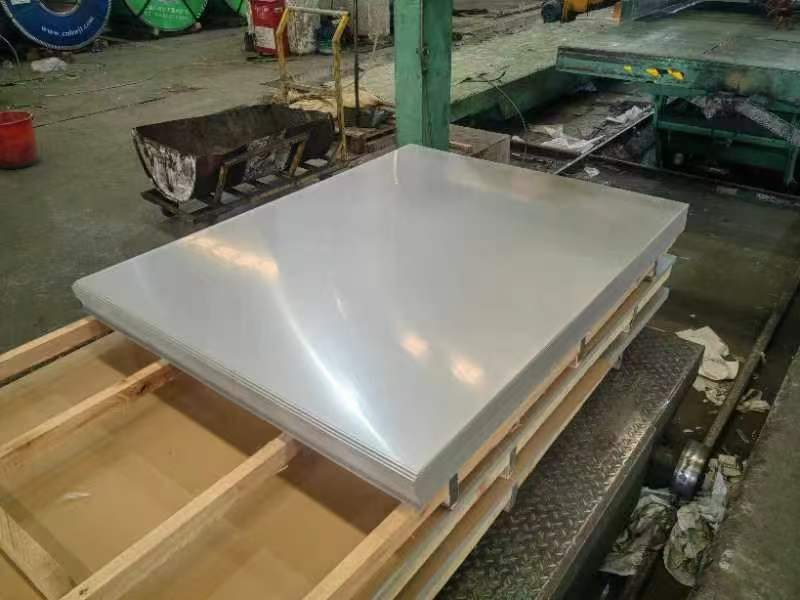
316 Stainless Steel Sheet / Plate
Austenitic stainless steel, density: 7.93 g/cm³
Discuss your specifications ↗Chemical Composition (wt%)
| Item | Specification / Description |
|---|---|
| C | ≤0.08 |
| Si | ≤0.75 |
| Mn | ≤2.00 |
| P | ≤0.045 |
| S | ≤0.030 |
| Cr | 16.0~18.0 |
| Ni | 10.0~14.0 |
| Mo | 2.0~3.0 |
316L variant: C ≤0.03, superior intergranular corrosion resistance after welding
Applicable Standards
| Item | Specification / Description |
|---|---|
| Standard / designation | GB/T 3280 |
| Standard / designation | ASTM A240 |
| Standard / designation | JIS G4305 |
| Standard / designation | EN 10088-2 (1.4401 |
| Standard / designation | S31600) |
Mechanical Properties
| Item | Specification / Description |
|---|---|
| Specification | (Solution annealed) Tensile strength ≥520 MPa, Rp0.2 ≥205 MPa, Elongation ≥40%, HB ≤200. Not heat-hardenable. Non-magnetic annealed, weak magnetism after cold forming. |
Surface Finishes
| Item | Specification / Description |
|---|---|
| 2B cold rolled dull | general industrial grade for bending & stamping |
| BA bright annealed | cosmetic & polishing base |
| NO.1 hot rolled & pickled | thick plate, tanks & structures |
| Specification | NO.4 hairline, HL line grain, 8K mirror, satin (custom) |
Size Range
| Item | Specification / Description |
|---|---|
| Cold rolled sheet | 0.3~3.0 mm, tolerance ±0.02~±0.05 mm, standard sheet sizes 1000×2000, 1219×2438 (4×8ft),1500×3000 |
| Hot rolled plate | 3.0~120 mm, tolerance ±0.3~±1.0 mm. Laser cutting, circle cutting, slitting available |
Features
- Molybdenum alloyed, excellent pitting resistance against chloride, salt spray, seawater and mild chemical media, much better than 304
- Good formability and weldability; continuous service temperature ≤300℃
- Slightly lower work-hardening rate than 304. Higher cost. Mo content makes it gummy during machining.
Applications
Marine equipment, swimming pool parts, chemical machinery, waste water treatment, medical & pharmaceutical equipment, seawater filters, coastal outdoor enclosures, salt-spray cabinets, high-end sanitary hardware
Material Selection Guide
Grade selection guide 316: Standard grade, slightly higher strength, for non-frequent welding 316L: Low carbon, ideal for heavy welding, pharma & clean process 304: General corrosion resistance, not chloride resistant, cost-effective